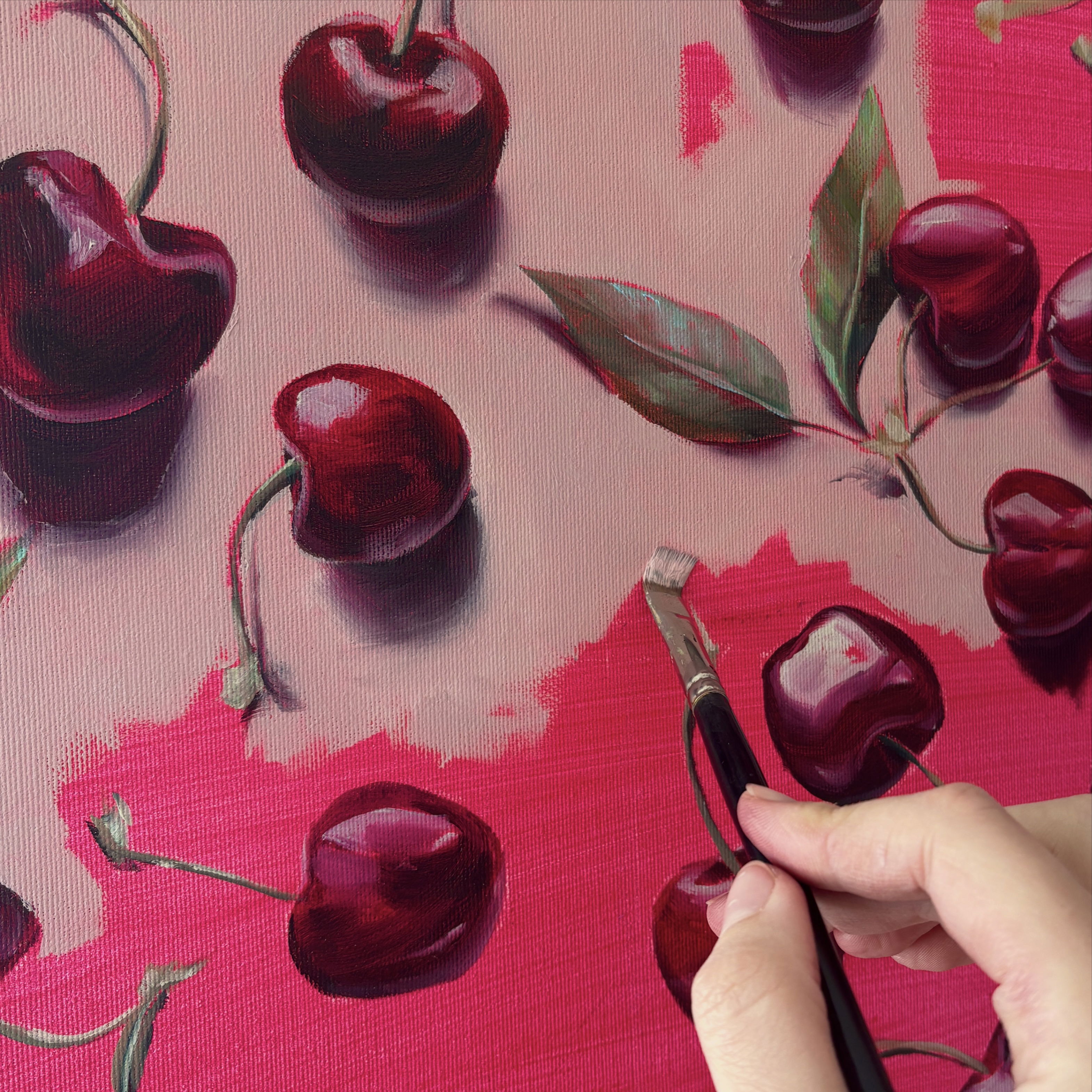
How an oil painting is made – the story of the cherry painting
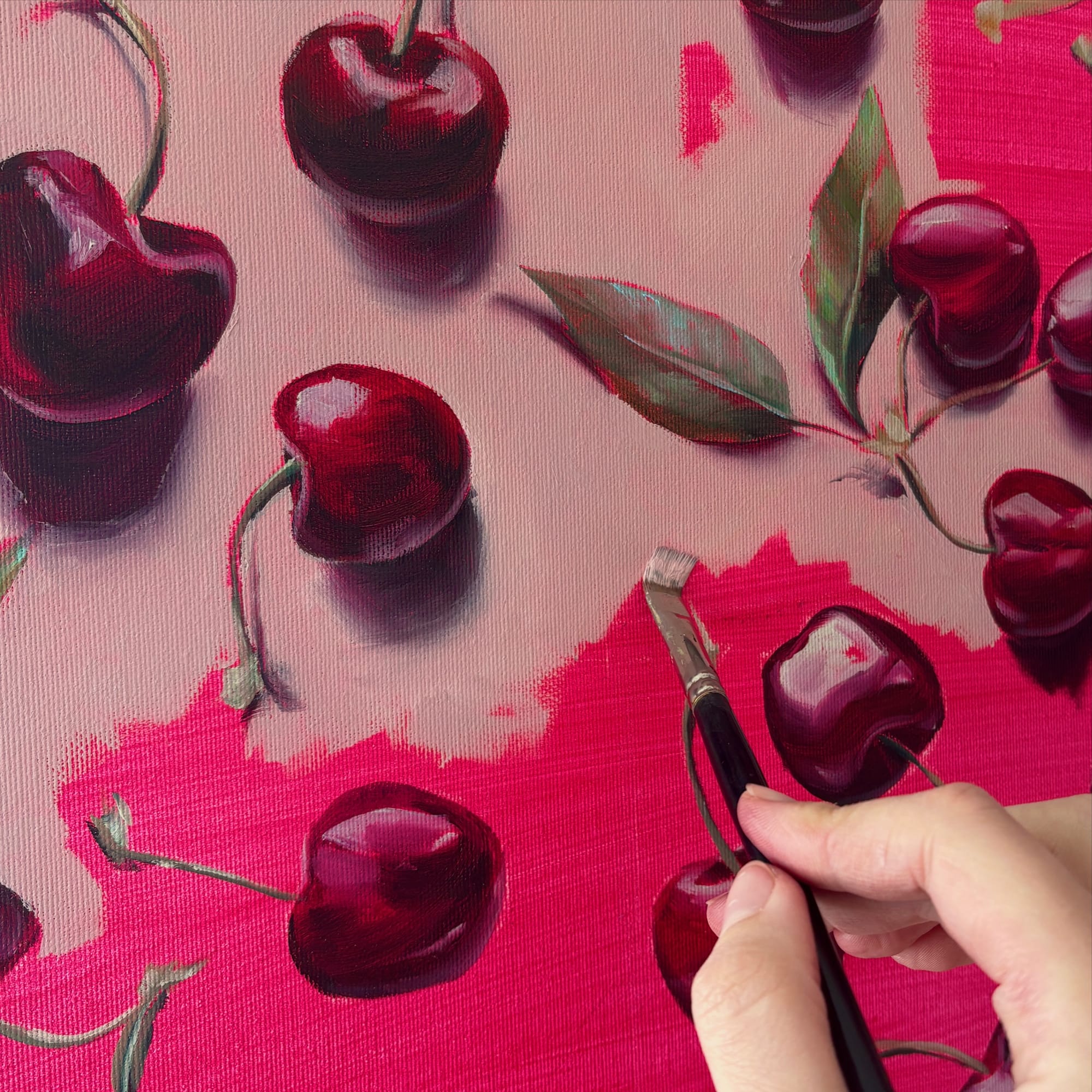
When we view a painting in an online gallery, we see only the finished work. Matching colors, light, and composition. We rarely consider how many stages lead to this effect. Painting a painting is a process full of decisions: changing the composition, building color, working with light and details. That's why I decided to share the story of one of my paintings – a painting with cherries. The motif of fruit appears frequently in my work, as it offers enormous opportunities for working with color, light, and contrast.
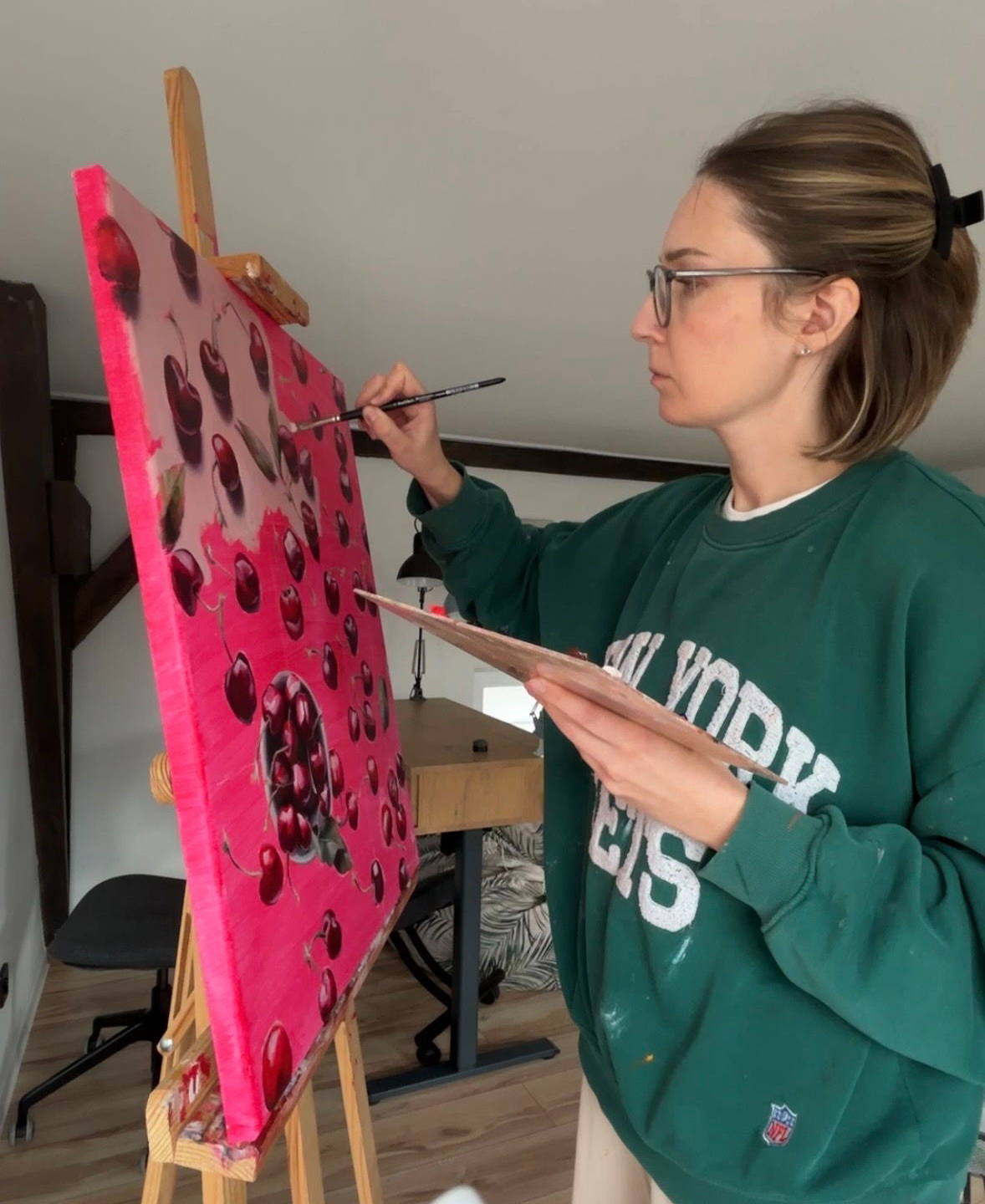
Stage 1 – idea and first composition
Every painting begins with an idea. In this case, the inspiration came from ripe cherries – their deep color, shiny skin, and thin green stems create a very painterly composition. A simple sketch begins, allowing the artist to decide:
- where the fruit will be found,
- how the light will spread,
- what will be the rhythm of the entire composition.
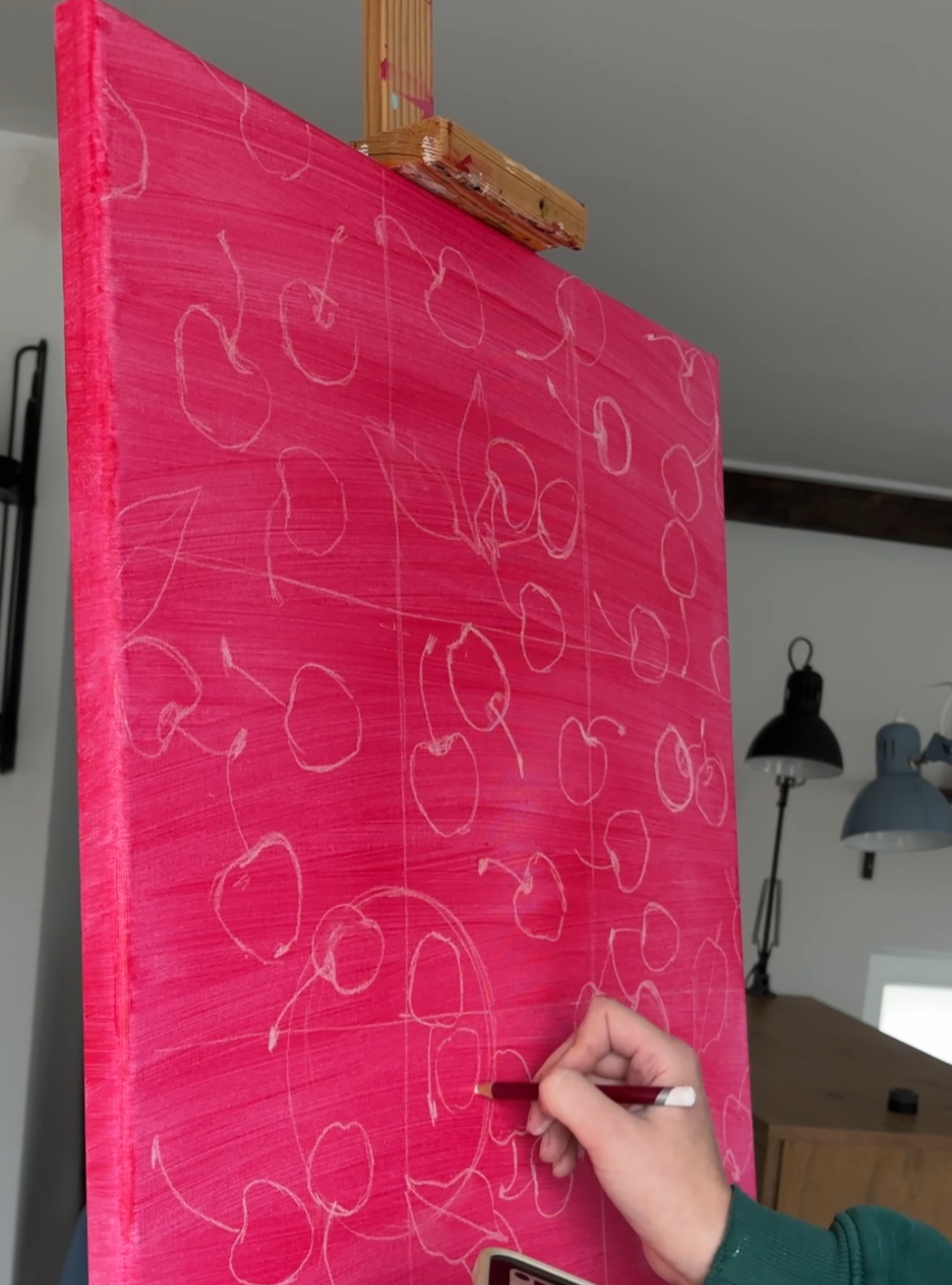
Even before the sketch, a very loose underpainting appears—an intense layer of color that later partially shows through from beneath subsequent layers of paint. In this painting, it was a strong pink.
Step 2 – color selection and palette preparation
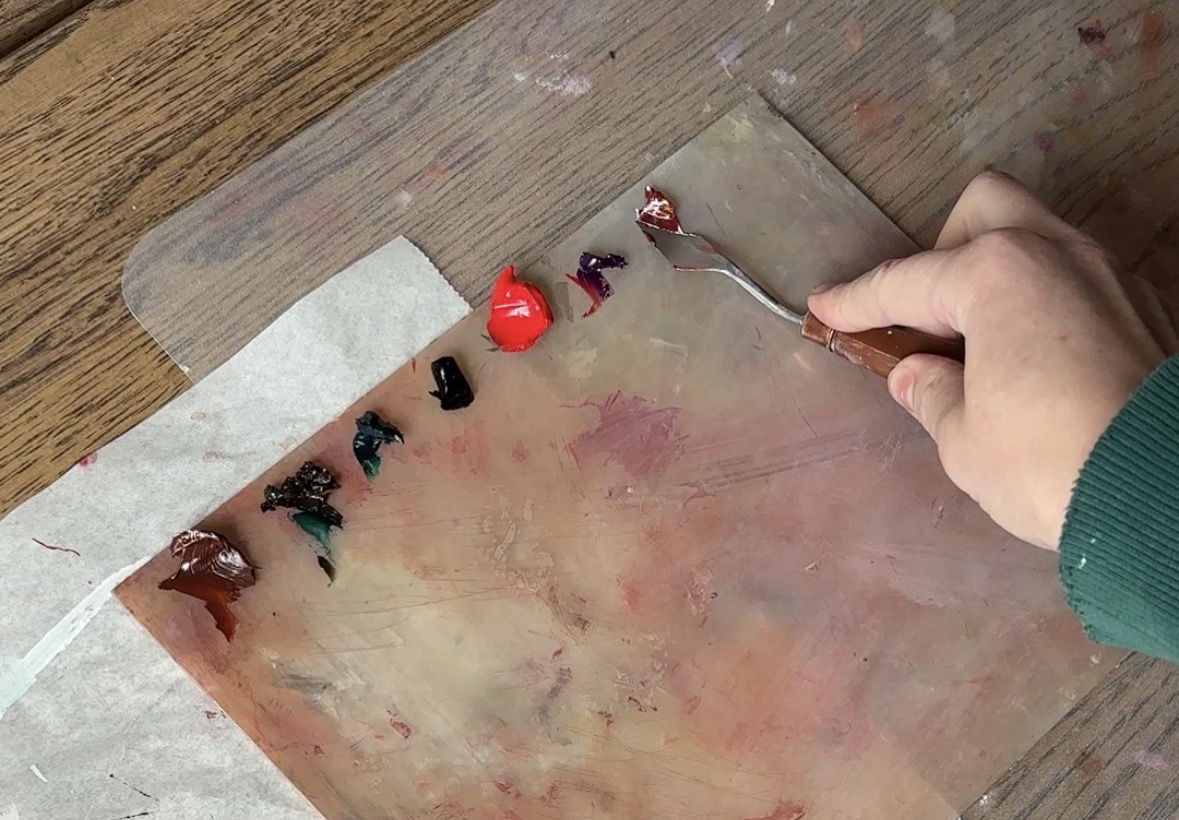
Before the actual painting begins, I prepare the colors on the palette. This step often remains invisible to the viewer, but it's crucial. The right choice of paints determines whether the painting will have depth and natural color transitions. Various shades appear on the palette: red, burgundy tones, and green tails. Only once the colors are prepared does the actual painting begin.
Stage 3 – building the fruit form
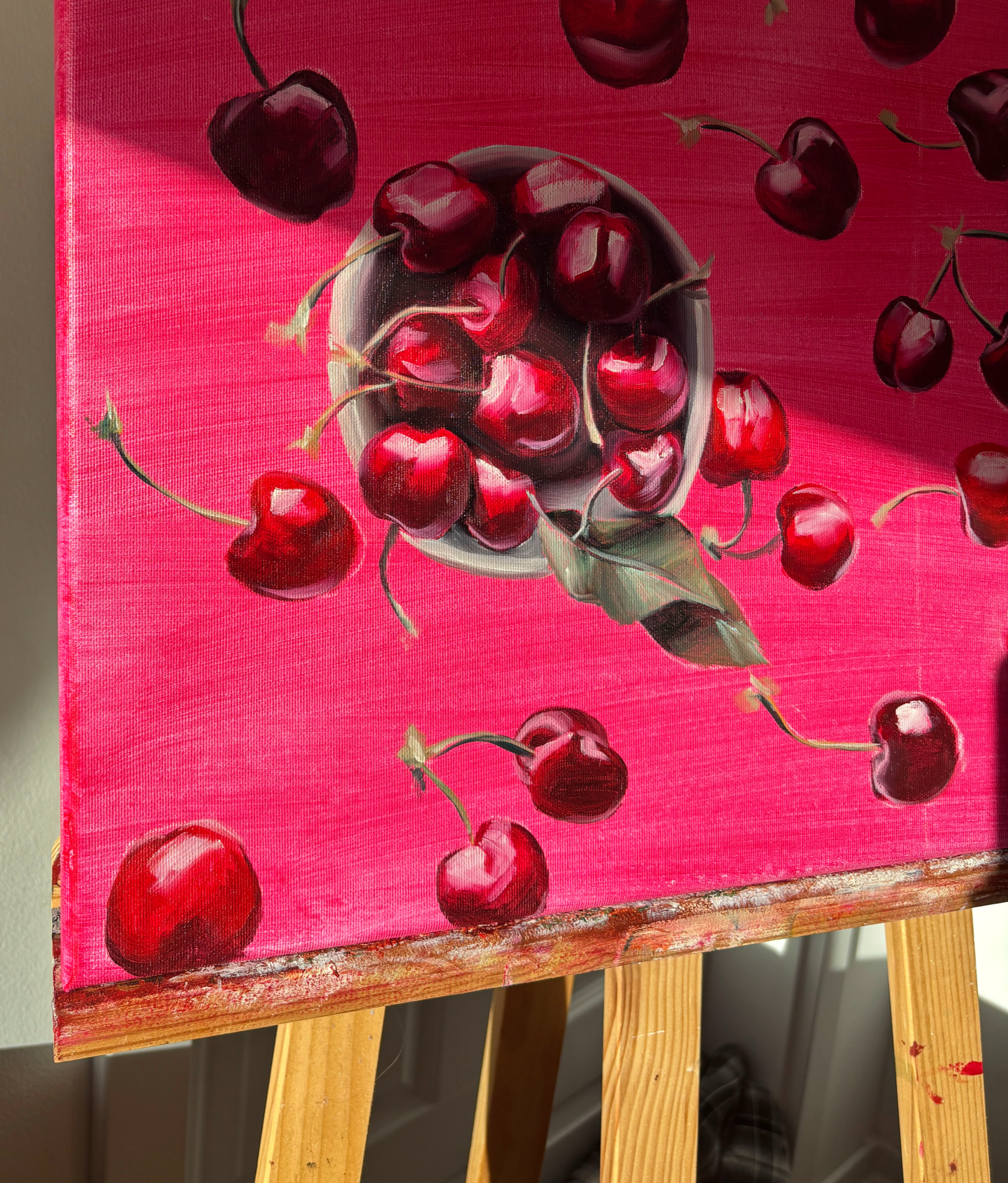
The most time-consuming step is modeling the fruit. Cherries have a distinctive surface—smooth, shiny, and reflective. To achieve this effect, the form must be built up in several layers. First, a dark base color is applied. Then, midtones and subtle transitions are gradually added. This gives the fruit a three-dimensional appearance.
Step 4 – shadows under the fruit and the background
Once the fruit is painted, I begin working on the space around it. I add shadows beneath the fruit, which stop the composition from looking flat. Only at this stage does the actual background of the painting appear. The background color has a huge impact on the overall composition—it can emphasize contrast or give the image a calmer feel. In this painting, the background remains subtle and striking, making the red fruit even more eye-catching.